
May 15 - Smart money is quietly changing its strategy

3 Key Signals This Week
This week we look at several key signals that showed up in data, tech and financial developments. We then extract insights about what these signals mean for us and our strategies and how we can focus our actions and skill building for best advantages in the months ahead.
1. AI Compute becomes a commodity...
The Chicago Mercantile Exchange announced plans to launch futures tied to AI compute markets and GPU rental pricing. This is a first. And a meaningful shift.
It suggests that compute infrastructure is evolving from a technical resource into something markets may increasingly treat like oil, electricity, or freight capacity. Something that you can trade.
This signal is part of a set of signals that hint at increasing volatility.
2. Productivity Narratives
The Economist says America is experiencing a productivity miracle but doesn't really explain what is driving this "miracle" other than to point out (correctly) that it's not AI.
Cloud adoption, automation and post-Covid restructuring have increased productivity, but the biggest and most direct driver of productivity gains?
Layoffs.
As noted in the Challenger Report for May, layoffs were up 38% in April. 2025 was a big year for layoffs and 2026 could be similar.
Productivity is output divided by labor hours worked. After layoffs the remaining workers absorb the remaining work and measured output per worker rises. Key point: Rising productivity stats shouldn't be celebrated in a vacuum. On its own it does not mean good things for our changing economy.
3. More confirmation of permanently higher inflation
The US Government is on a long trend of increasing deficits. Note the blue line trending sharply downward in the CBO chart below. Contrast also the red bars (deficit as percent of GDP) from 2022-2035 vs the same in early deficits (75-80, 83-90, 92-2000, 2009-2014). In earlier eras deficits as percent of GDP are steadily reduced. Since 2022, deficits as a percent of GDP have stayed in the 5-6% range.
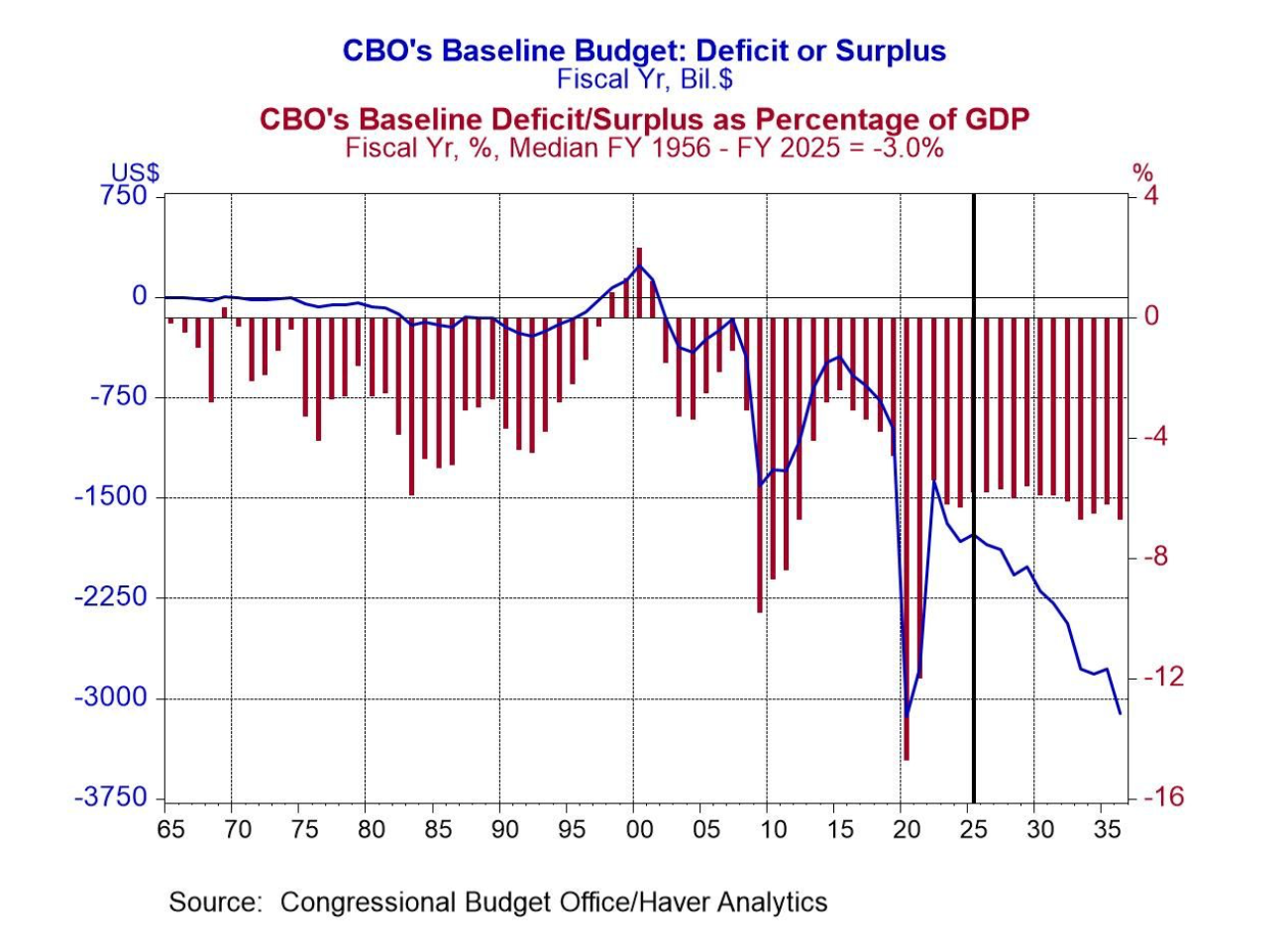
As shown in the chart above, the latest Congressional Budget Office data signals permanently higher inflation, as the US government navigates the consequences of shifting its tax burden away from corporations onto individuals...literally seeking more and more of its tax income from the portion of the economy that has the least money.
Implications: What kinds of strategies are emerging as different groups absorb these signals?
Sophisticated capital positions defensively
Berkshire Hathaway expanded stakes in Japanese trading houses while simultaneously holding historically large cash reserves. This is not the behavior of markets expecting continued growth.
This combination suggests a desire to:
- Be ready for a severe market correction, and
- Diversify into regional trade infrastructure.
Realtors anticipate a migration driven by cost and climate
This household expenses data from the Common Sense Institute in AZ is an interesting overlay to climate suitability projections for the US.
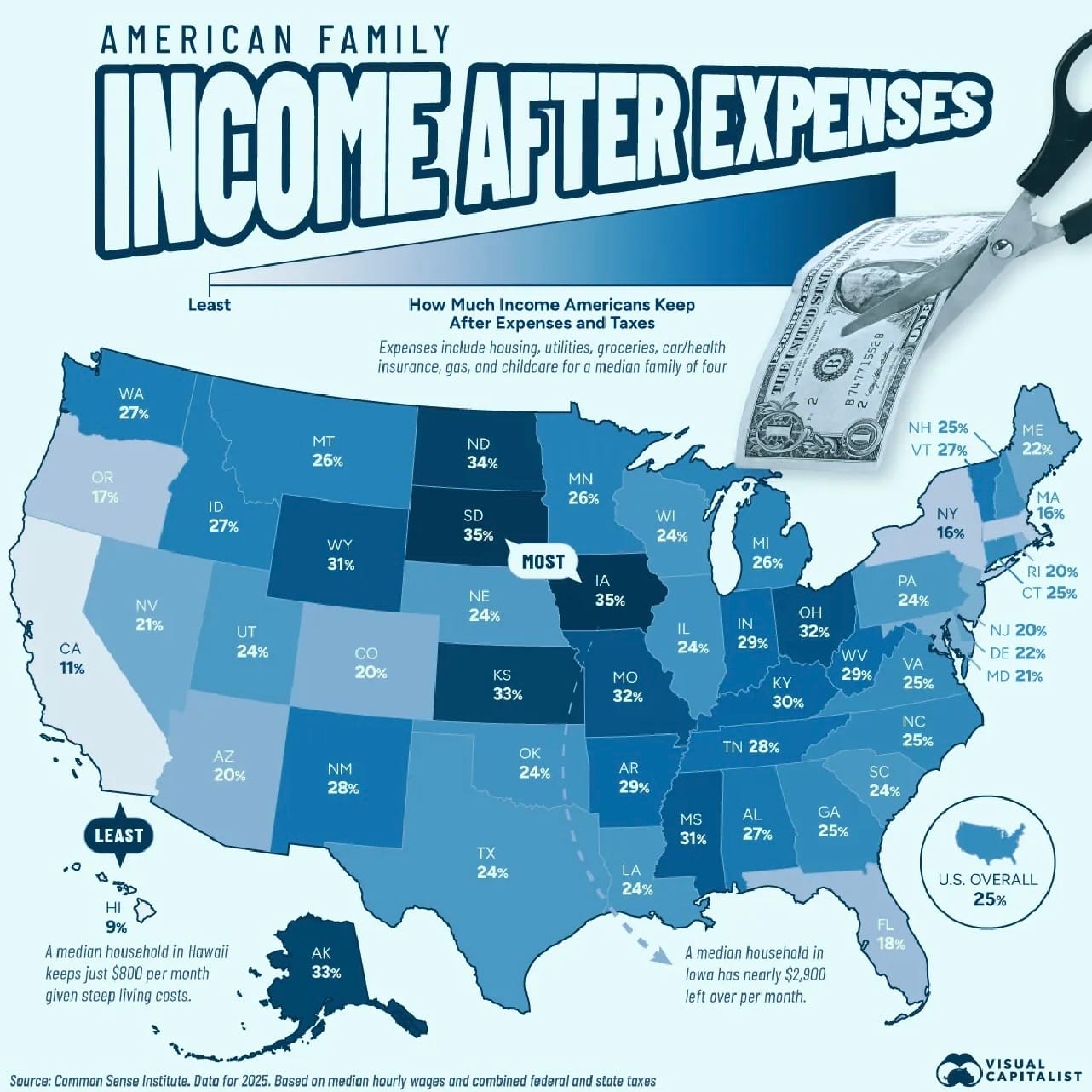
The image above shows the percent of income households are able to keep after expenses. But this is only one driver of a likely migration that will have big consequences for both real estate and farming/food production.
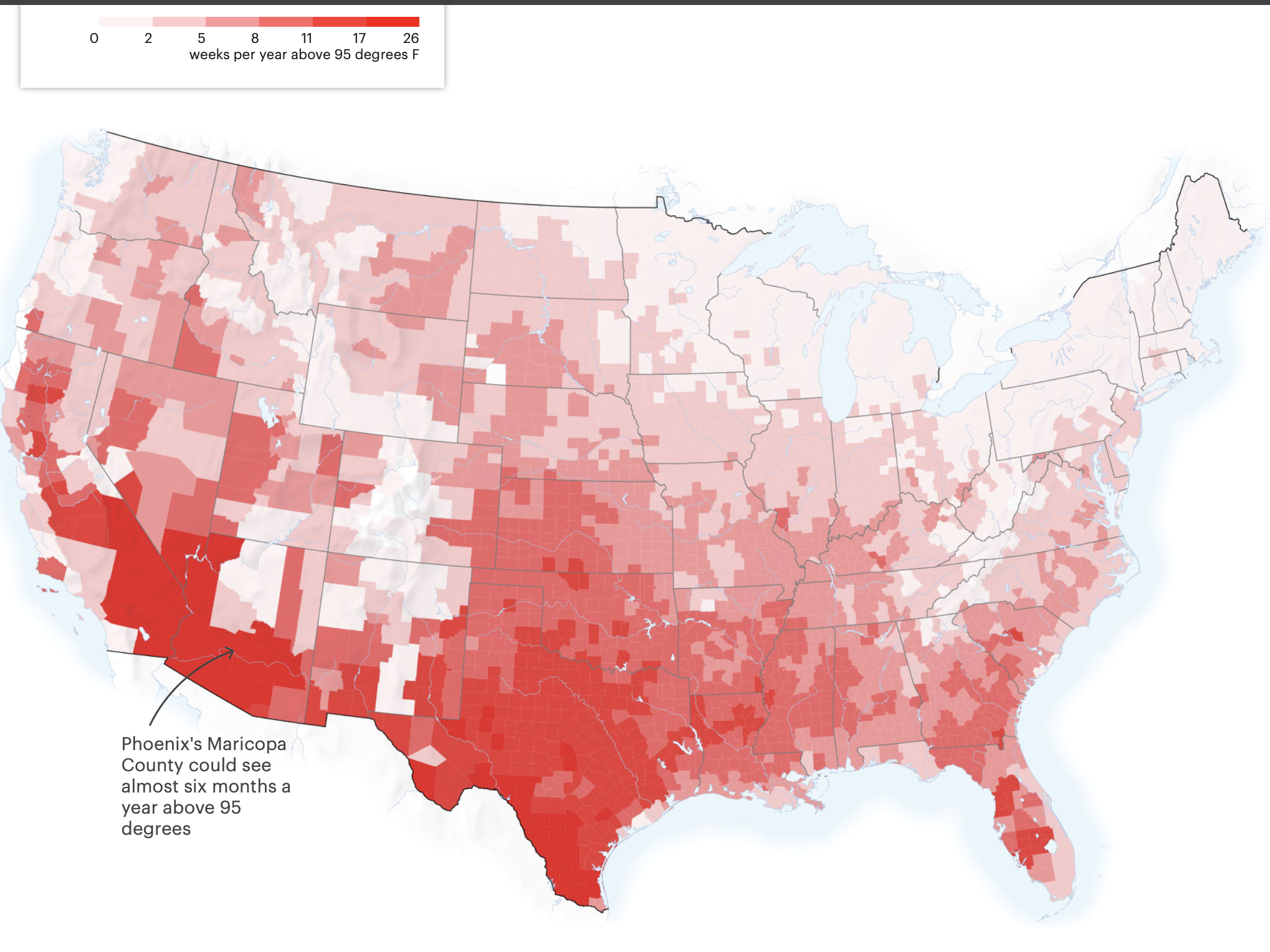
The images below show various views of climate suitability projections based on a mix of data sets and the likely climate migration that will happen in the US as a result.
First, average heat projections ~2040-2070:
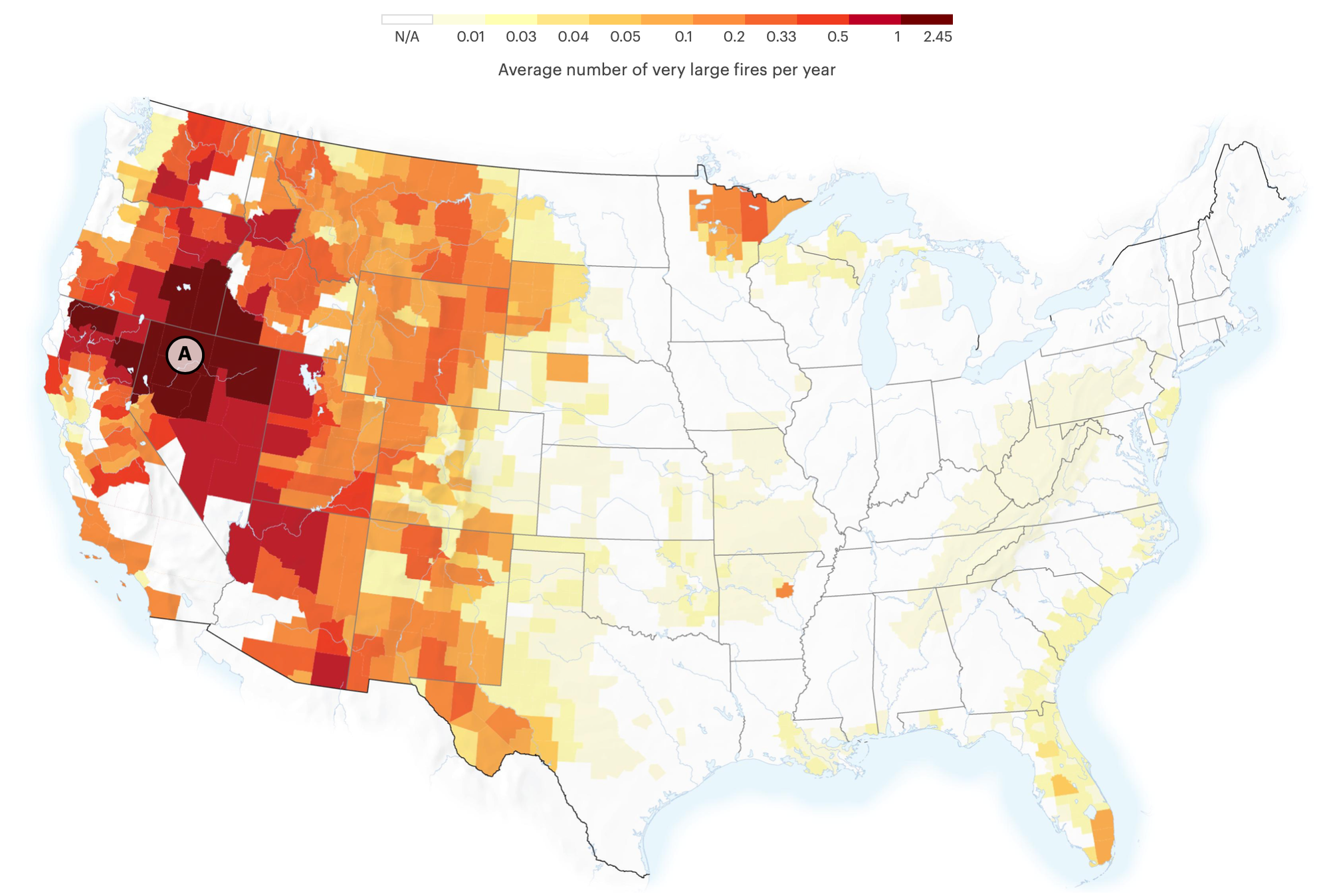
Wildfires per year:
Then this interesting view of crop yields 2040-2060. The purple areas will see declines in crop yields while the green will see increases.
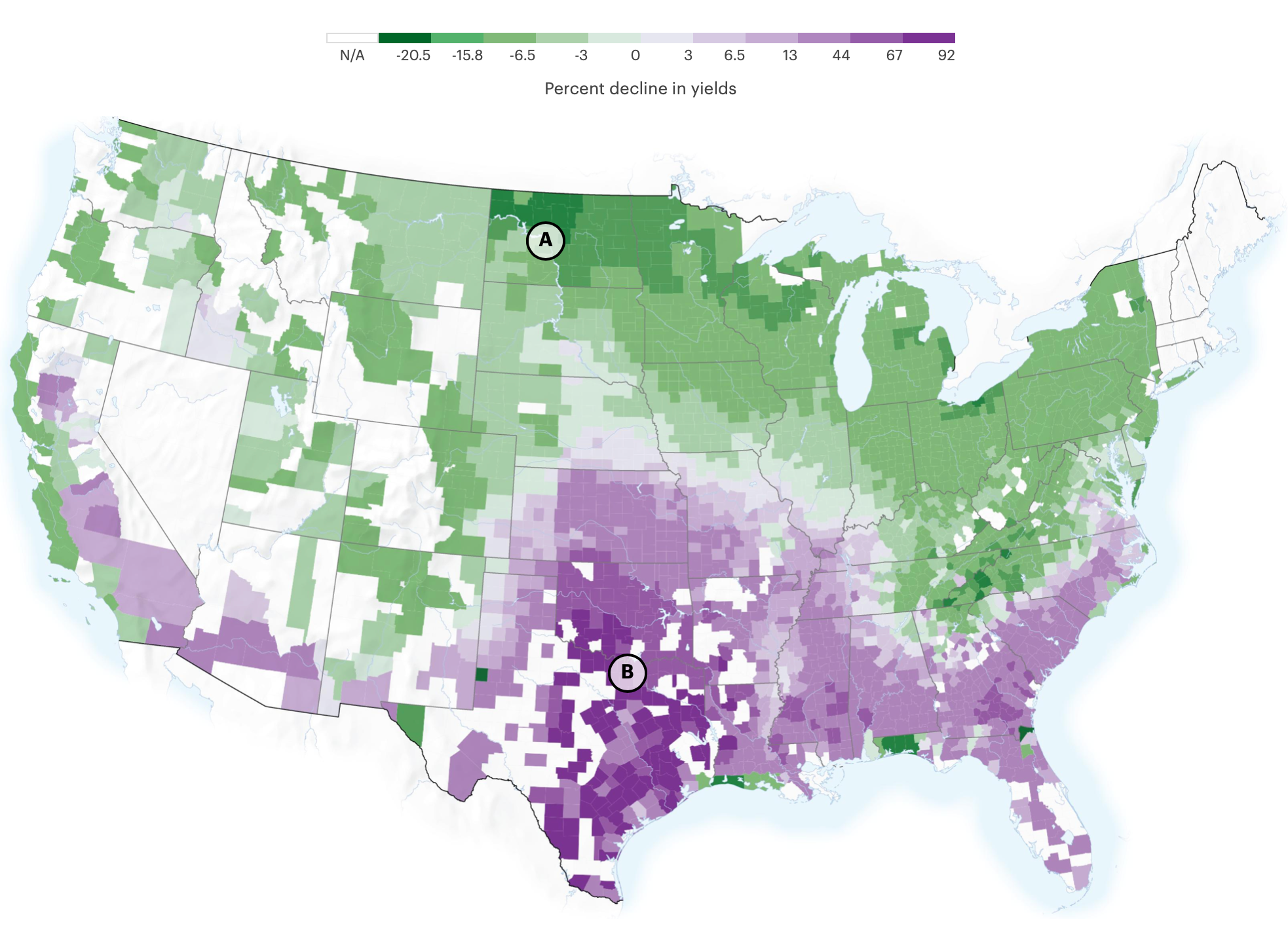
There are other views in this same report, including coastal flooding zones.
Taken together, there is a shrinking area of suitability for both farming and general living in the US. The image below shows the approximate most-suitable zone: the green region represents the area least impacted by climate change issues: hurricanes, coastal flooding, wildfires, and heat.
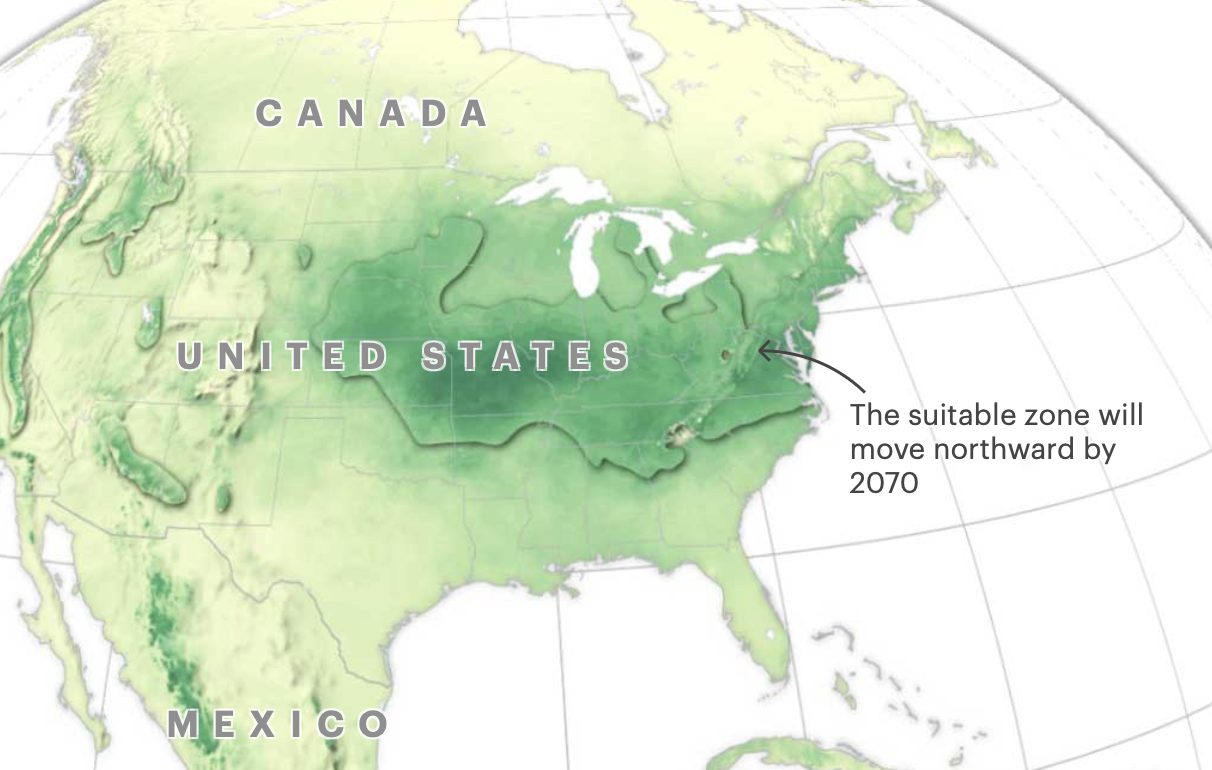
Realtors have picked up on this and are marketing "climate resilience" as a factor in choice of where to buy a home. Here is just one example: Fast Expert's 2026 Climate Migration Map: Best States to Buy for Long-Term Resilience.
Attention continues to accrue to post-fiat capital
The Clarity Act advanced in the Senate this week with bipartisan support.
The legislation finally provides clarity on who governs digital assets (CFTC) vs digital securities (SEC) and sets the stage for more organized adoption and use of these new technology-based financial instruments.
From a bigger picture perspective - this legislation is one part of a broader search: Smart money is on the hunt for capital / forms of wealth that are not as vulnerable to inflation as government-issued currencies (so called fiat currencies).
This search is becoming a stronger and stronger trend: from the original Bitcoin maverick investors, to the institutional investors adopting crypto today, to the steady march of government legislation and innovation in digital finance. It all amounts to a search for financial stability. We need to make sure this path is clear, and open to everyone. Help everyone take step up from being solely reliant on inflation eroded wages, to also owning capital. And forms of capital that are best suited to outpace inflation.
Helping everyone gain financial literacy and empowerment helps the economy move past volatility based speculation to value based creation. The difference:
- volatility based speculation creates value only for those on the right side of information asymmetries
- value based creation creates value for everyone.
In the S3T frameworks and essays we talk about the concept of a "Wealthy World"...which if you think about it would be the smartest move of all. What we've outlined here is one of the key paths to moving toward that kind of wealthy world outcome.
How to explore and find your paths to resilience and thriving:
- Executives: Evaluate hidden infrastructure dependencies inside your AI and digital transformation plans.
- Investors: Watch energy, compute markets, logistics systems, and infrastructure ownership — not just software narratives.
- Professionals: Develop skills that combine technical literacy with systems thinking, communication, adaptation, and strategic awareness.
- Thought Leaders: Focus on helping people interpret change calmly and clearly rather than amplifying fear or hype.
Skills To Develop
- Systems thinking
- Strategic awareness
- AI workflow integration
- Energy and infrastructure literacy
- Narrative analysis
- Cross-disciplinary communication
- Operational resilience planning
- Financial and macroeconomic literacy
Opinions expressed are those of the individuals and do not reflect the official positions of companies or organizations those individuals may be affiliated with. Not financial, investment or legal advice, and no offers for securities or investment opportunities are intended. Mentions should not be construed as endorsements. Authors or guests may hold assets discussed or may have interests in companies mentioned.
Member discussion