K shaped economy? Its ok, we know what to do...

We've been here before, yes, many times...
Fossil fuels: economic liability not just a climate liability
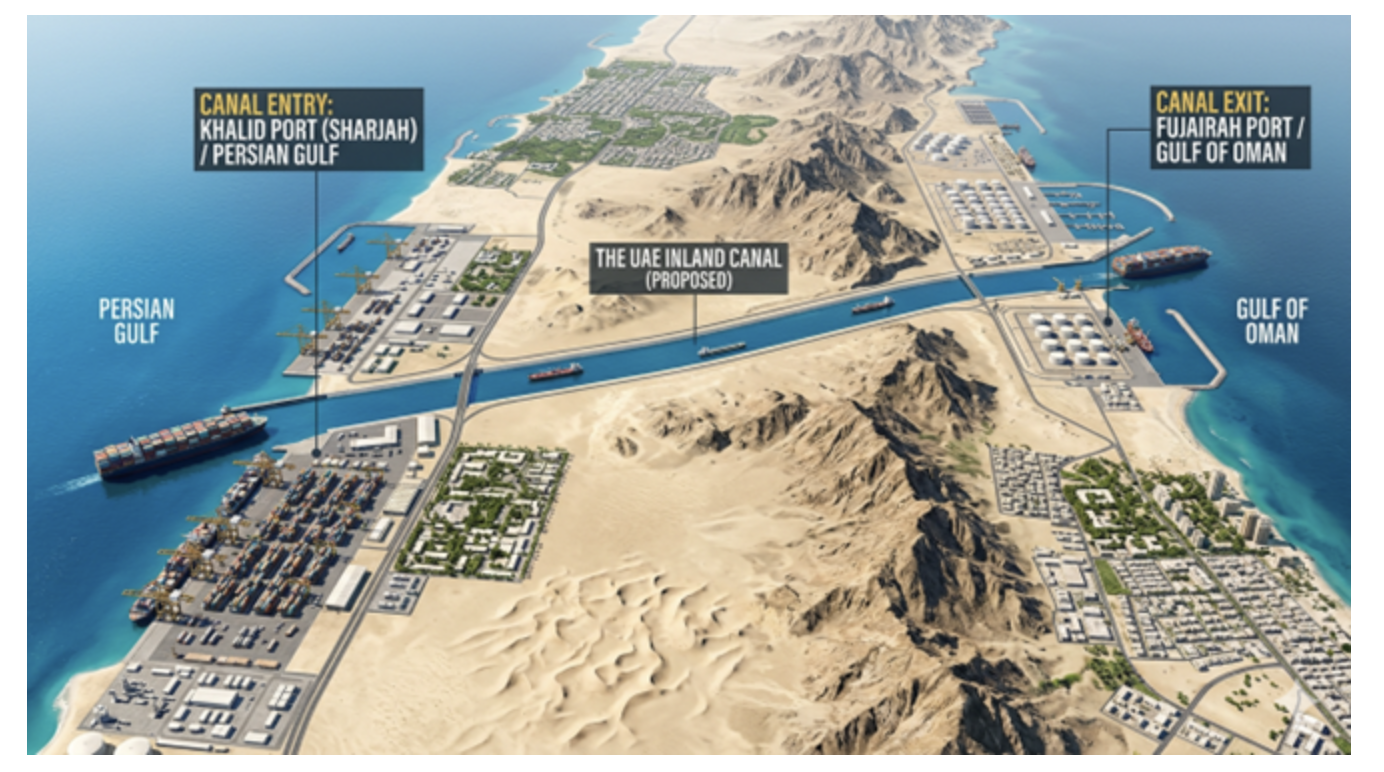
This Austrian defense analysis group is proposing that the UAE build a canal to bypass the Strait of Hormuz and build new pipelines and scale up the Abu Dhabi Crude Oil Pipeline.
Monumental project ideas like these cement for many the reality that fossil fuels are an economic liability not just a climate liability.
As noted in previous editions of S3T, China doubled down on a strategic shift to green energy, ignoring the fossil fuel political fads elsewhere.
China added more than 430 GW of new wind and solar capacity in 2025 alone, pushing total renewable capacity above 1,800 GW and taking renewables to more than 60% of installed power capacity. China's solar and wind energy costs run below global averages. See this Energy Central explainer and its links to primary sources.
For now though most other places in the world are not so well positioned. Inflation in both core energy and core compute costs is creating a flywheel of affordability problems for broad sections of societies around the world.
Can't blame everything on the Middle East ...
Andy Cates writes in this excellent macroeconomic decoder that the current Middle East crisis isn't hurting the economy, as much as its just revealing what was already happening.
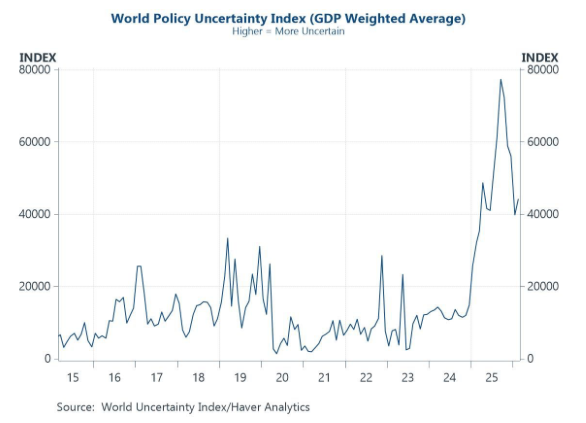
The global economy is becoming more uncertain and harder to manage using traditional economic tools. Central banks are losing their ability to understand and influence the increasingly complex and fragmented forces shaping the global economy.
Individuals and families are noticing the difference between the headline economic figures vs their own lived experience. Economic figures like GDP, growth, etc don't resonate when they are a skewed amalgam of the good fortunes of a few masking the not-so-good fortunes of the many. A majority do not believe that interest rates can tame inflation.
K-shaped economy in the US more obvious now
The "K shaped economy" was a phrase coined by Goldman strategist David Kostin in 2020 to describe situations where an economy seems to split into 2 parts, and going in two different directions - part of it seems great and getting better, while the other seems well, pretty hopeless.
The long trend data has indicated this problem for some time now: spending growth in the hands of a rich few in contrast to shrinking or stagnant spending among the rest.
This chart compares G7 nations and shows how the problem persists more severely in the US.
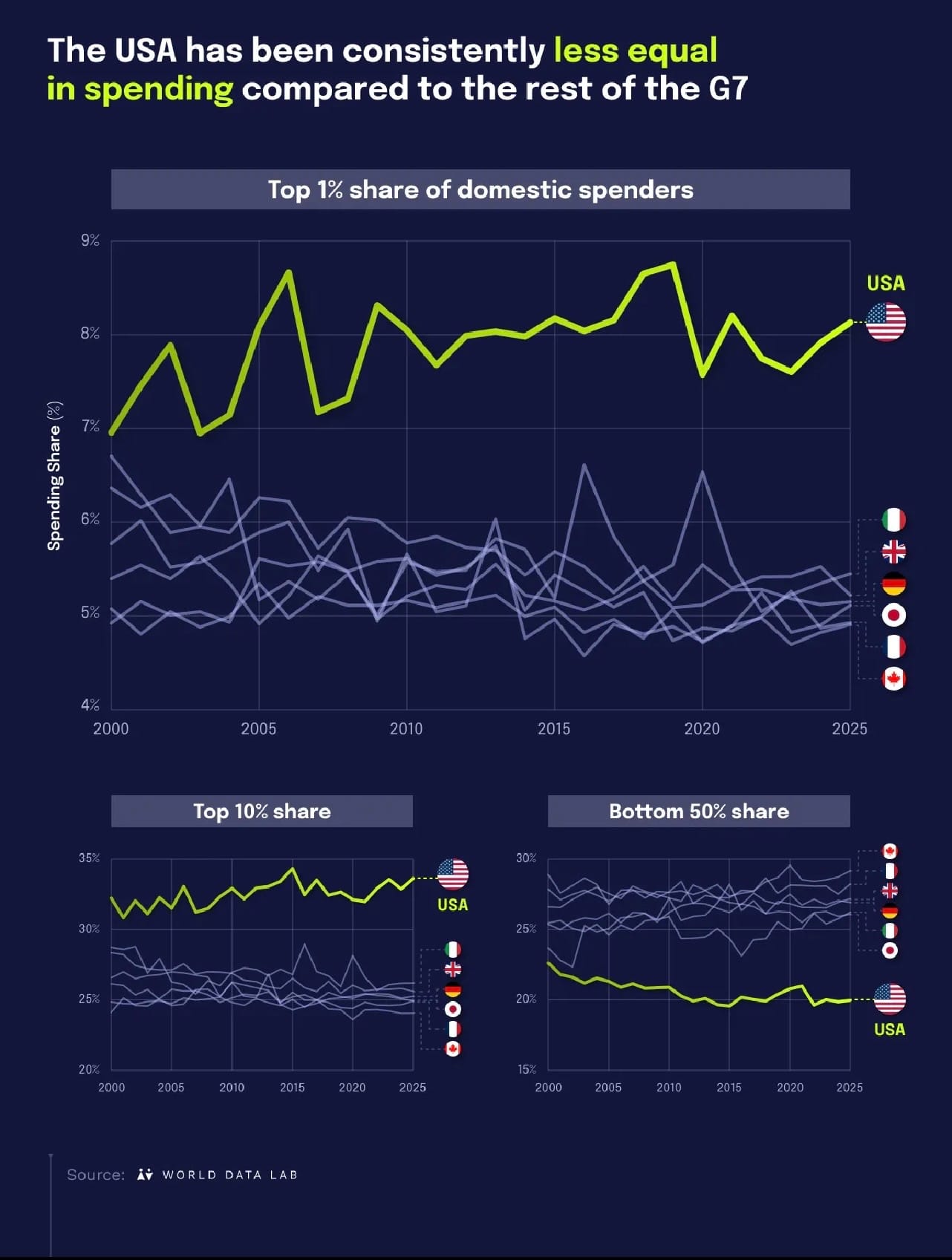
Notice 3 things here:
- the gap between the top percentiles vs bottom half
- US as unique in having the largest gap by far
- The persistence of this issue in the US since ~2005
This trend eased during the post pandemic recovery, but returned full force in Jan 2025.
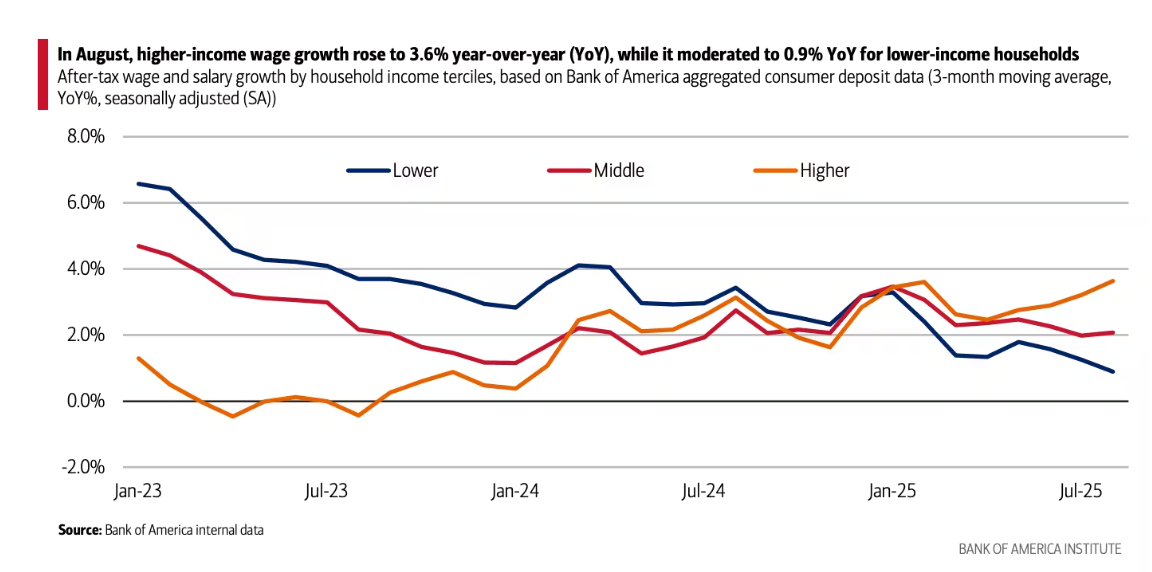
Bank of America tracks trends in paycheck deposits to understand wage growth. As shown in the chart above, since 2023, there has been:
- marked decline in the rate of growth for lower income tier, approaching zero by mid 2025
- modest decline in mid-income tier
- steady increase of wage growth for higher income tier
Airplanes, groceries, crypto
Its interesting to see where the "K" keeps showing up in the economy:
Airlines have noticed the K shaped economy, and are allocating more of their cabins to higher priced premium seating.
Walmart stock doubled in the past 2 years - but it wasn't because people wanted more clothes, household items or camping gear...
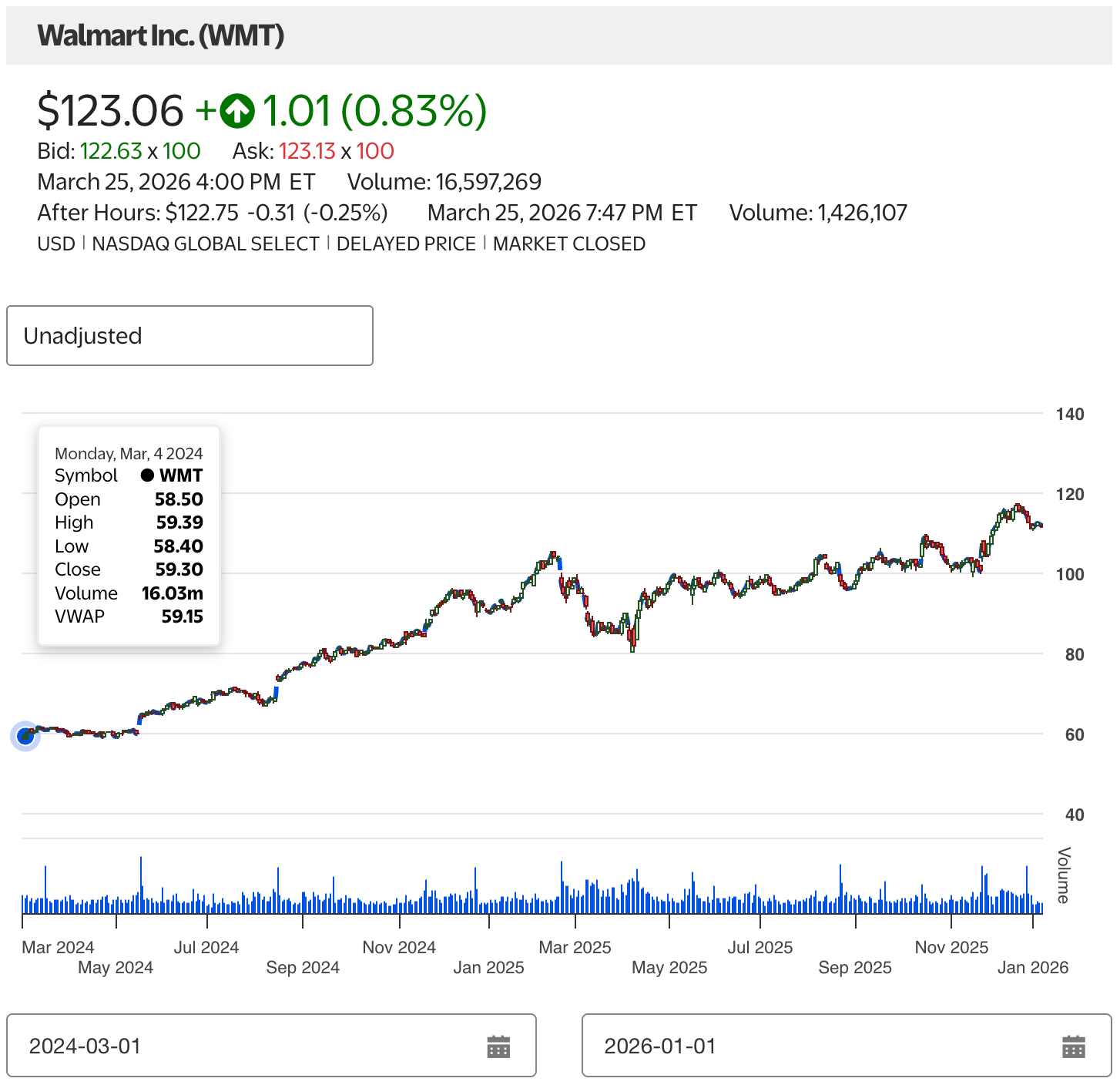
Groceries accounted for 60% of Walmart's growth, making Walmart the largest grocer by market share in the US, with a record 72% of US households heading to Walmart as financially constrained consumers shifted to lower cost options.
The overall retail sector read on this: the competitor to beat is not Walmart per se, but rather the erosion of consumer purchasing power. Retail analyst DunnHumby explained the K shaped economy for their retail customers this way:
"Americans are not paying less; they are being forced to accept a lower standard of living to maintain the same level of spend, while interest rates continue to fall and the cash they hold and salary they earn becomes worth less, in real terms."
Which brings us full circle back to Andy Cate's original point: Central banks and traditional economic policy tools are losing their grip on today's economy. These tools - designed to measure and stimulate value creation - aren't suited for a reality where
- value creation is accelerating ahead of policy and governance
- participation in that value creation is increasingly uneven.
All the different signals: shifts in grocery shopping patterns, debates over stablecoin yield, fascination with online betting, meme coins and speculative assets are all expressions of one thing: people are desperate to participate in value creation. Wages alone are no longer a path to financial security.
Opportunity: modernize and broaden capital ownership
For change leaders, this time represents a rare window of opportunity. What we are witnessing at this point in the 21st century is not just another bear/bull cycle, but rather a structural shift in how value gets created and distributed. An inflection point with new emerging forms of capital: AI agents, robots, digital assets and financial rails. But we have a choice:
- Economic stability by expanding access to ownership of new value engines
- Economic instability thanks to hyper-concentration of capital
This doesn't have to look like some kind of socialistic dystopia. And it's not abstract theory either. The practical path forward is actually a familiar one rich with lessons from history, with a long track record of successes:
- The GI Bill the broadened access to knowledge capital
- The federal programs that expanded home ownership
- The employee ownership and ESOP movement that enabled broader ownership in companies
- Credit unions and rural co-ops that expanded access to financial and physical infrastructure
- 401K plans that brought equity ownership to millions
- More recently e-commerce, digital creator tools, and digital assets - while hit and miss - hint at the rise of new digital forms of capital and value creation to come.
The point is, we've been doing this a while now - and in different ways - with pretty decent success. It's time to do it again!
Opinions expressed are those of the individuals and do not reflect the official positions of companies or organizations those individuals may be affiliated with. Not financial, investment or legal advice, and no offers for securities or investment opportunities are intended. Mentions should not be construed as endorsements. Authors or guests may hold assets discussed or may have interests in companies mentioned.
Member discussion