July 4, 2026 - The uncertainty was always part of the deal...
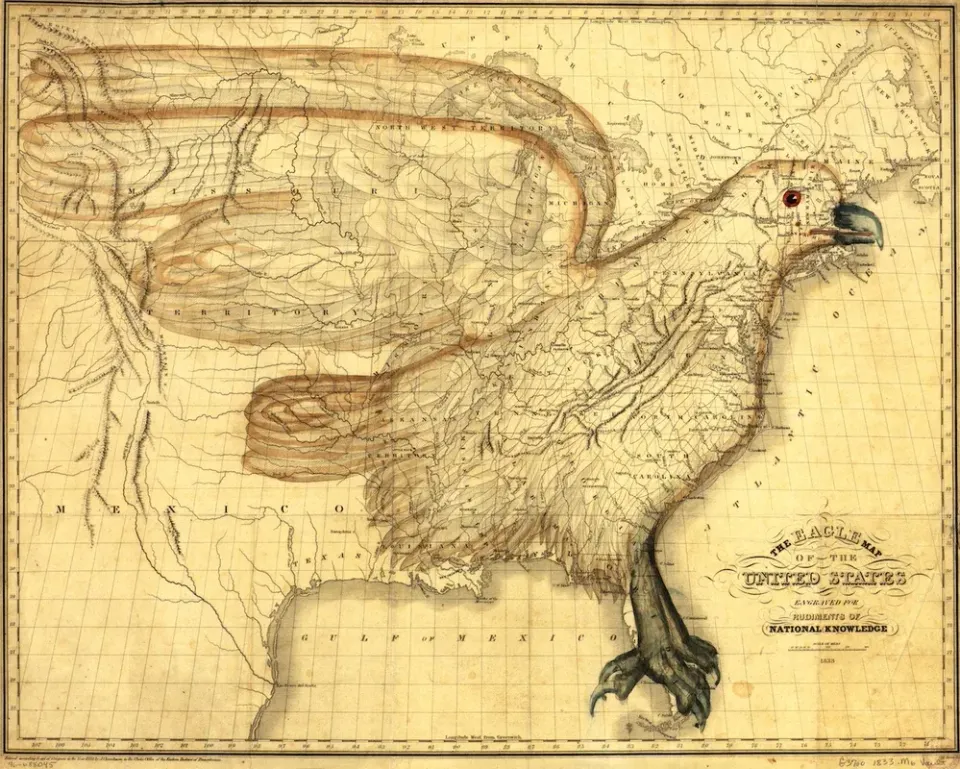
Happy July 4th - today we are celebrating the nation's 250th birthday and a milestone of this magnitude deserves a pause for reflection, and as we always share in the S3T newsletter - a forward outlook on the work required to enable a better future.
Just 8 years after the American Revolution had been won, Robert Johnson was riding on his horse through the woods of western Pennsylvania. Suddenly he found himself surrounded by 11 men dressed as women. They pulled him off his horse, stripped him naked, then tarred and feathered him. After this they stole his horse, and left him alone in the woods.
Robert Johnson was a federal tax agent sent to enforce a new tax on whiskey - part of young American government's desperate plan to raise revenue and address the crushing debt from the costs of the War for Independence. Most citizens figured taxing whiskey was just plain wrong. They were determined to make it stop.
This was just one of the bizarre opening events of what became the Whiskey Rebellion. It culminated in a movement that created its own flag and ultimately recruited a local militia of 7,000 men planning to attack Pittsburgh (the original Pittsburgh "stealers") .
As the armed militia gathered outside the town, the Pittsburgh folks - always quick thinkers - sent out a gift of several barrels of whiskey. This helped defuse or at least delay the crisis but ultimately George Washington ended up assembling a federal militia of 12,000 to put down the revolt.
This was just one of many rebellions, uprisings and riots in our 250 years of history - here is the full list and it's longer than you're expecting. And this is just one category of the many different kinds of uncertainty in the long story of our nation.
Uncertainty - and the way we handle it - turns out to be a very timely topic as we celebrate our 250th.
Much has been written about the noticeable tilt toward authoritarianism here in the opening years of the 21st century - not just in the US, but across other nations as well - and what makes this happen. Why do people create emotional bonds with authoritarian leaders?
The allure of certainty in a changing and complex world
People who feel economically insecure, socially displaced, isolated, or status-threatened are more susceptible to movements or political leaders that say with certainty:
“Your problems are real. Here is who to blame. I will fix it for you.”
People fall into this, not because they are unintelligent. But rather because certainty can be emotionally relieving. The promise of certainty from an authority figure is powerful - it hits the core of what made us look to our parents, coaches, teachers, older siblings and other figures for reassurance when we were little.
Today we face a world that makes us feel little, unready, un-knowledgeable. As we face this world and its extreme uncertainty, something inside us has a strong desire to turn to a parent figure. The rising complexities and changes of our world today increases anxiety. Certainty - even just the promise of it - reduces anxiety.
Political strategists have learned to use this to their advantage. Politics always was a competition for emotional bandwidth. Today it's powered by algorithmic technology. In a world of constant feeds, short videos, and fragmented attention, oversimplified emotionally resonant fear-based narratives always outperform detailed explanations. This applies across the political spectrum, not just the far right.
These negative fear based messages are then paired with the promise of certainty:
"Your anxiety is well-founded. Dangerous things are happening. Here's who to blame, vote for me and I will punish them for you."
The election results over and over show just how powerful this formula can be. When triggered by fear based messages, paired with the promise of certainty from an authority figure, voters will overlook reason, ethics, legalities, scandals, any number of disqualifiers and vote for that authority figure anyway. Because we all have a very strong emotional need for certainty.
Amp the fear, promise the certainty, win the election.
Election results seem baffling only when viewed through "fact-based" lenses that doesn't factor in human psychology.
It's a depressing thought: This is supposed to be republic of freedom - but it's being run more like a republic of feardom.
But it doesn't have to stay this way. Our 250th is a perfect time to reflect and recalibrate for the work that remains, and the path ahead.

What our 250th means to me
What I think about and share here, I share as someone who wants to see our nation succeed. And as a son of ancestors who arrived in America before the Revolution, and at least 2 ancestors who fought in the Revolutionary War. On the shelves and walls above the desk where I work every day, I have my great great grandfather Huston Perrine's Civil War medal, my Dad's flag, and my collection of books on American history dating back to 1794. Beyond that I carry with me generations of stories handed down from my parents and grandparents about the work and the realities of being an American citizen.
I think our 250th is a good time to re-connect with the true uncertainty of the early years of our nation. We look back at the story of the Revolution, the Liberty Bell, the first flag, and maybe have this false notion that this was all a predetermined guaranteed march to freedom. In hindsight, in the retelling of the stories, it can feel very certain.
It absolutely was not. Not even after the War for Independence was won. The fact that today our continued security and freedom is still not a predetermined and guaranteed thing shouldn't surprise or demoralize us.
High uncertainty, dangerous errors, exhausting work to be done were always just part of the deal. We may have forgotten that, and this 250th celebration is a great time to reflect and reconnect with the realties. And steel ourselves for the path forward.
High Uncertainty
As a young adult I started collecting old books on political and economic history. One treasure on my shelves: the 1899 edition of the Presidential Papers: a 10 volume set of all US Presidential correspondence and speeches from George Washington to William McKinley.
Reading through these heavy old books, you get a sense of the day to day chaos that is very different from the sanitized stories of American history we learned as kids. And you can't help notice how fragile and imperiled our young nation was...how very unlikely it was that it would survive even the first 20 years. And how deeply divided it has always been, even in the initial years after the Revolution was won. So many aspects of the government were just a complete hot mess. Debt, currency, other hopeless challenges. Scary events like the Whiskey Rebellion. Nothing about those early days even hinted we'd still be here 250 years later.
Today we face new kinds of uncertainties as technology accelerates and the global economy changes. As in the early days, these uncertainties are often connected in some way to dangerous errors and issues in our national experience.
Dangerous Errors
I think most of us are aware of the errors in our beloved country, so there isn't a need (or time/space) to write out the entire litany.
But a few of the obvious ones from the past:
- Writing a beautifully inspired Declaration of Independence about equality and liberty - but then refusing to apply it to more than half of the population.
- Slavery and the systematic displacement of native people.
- The lack of an organized economic system, debt from the Revolutionary War, multiple currencies and other financial dysfunction.
- Taking nearly 200 years to recognize and encode basic civil rights into law in the 1960's.
- The odd fact that - except for the original native peoples - the rest of us were all literally immigrants...yet we can be easily induced to hate immigrants(!??)
Some of the obvious ones from the present:
- The US today is an exhibit of power minus wisdom - what Diana Senechal calls a Republic of Noise - where social media and memethink override clarity.
- Our leaders subvert our own economy, and give our international adversaries step by step lessons in how to let us defeat ourselves.
- We take the most vulnerable groups within our society and make them national punching bags for political gain. Basic rights for gender diverse individuals and families still seems to be a point of contention.
- Economic elites use their wealth to control media and shape political attention in ways that preserve their economic position, keeping non-elites compliant by distracting them with emotionally charged cultural conflicts.
- We destroy the credibility of our system of law by deploying poorly trained paramilitary teams to raid our own cities.
- Extreme concentrations of capital threaten economic stability. Our top leaders use their office to enrich themselves through blatant and obscene schemes.
But I would argue that none of what is happening today is any worse than the majority of US history. Aside from pockets of peace and prosperity - usually distributed very unevenly, our nation has always been a place where life for the average citizen was not certain or easy.
America is called "home of the brave" for a reason: You literally have to be brave to live here. That was always the case, and it still is.
Work to be done
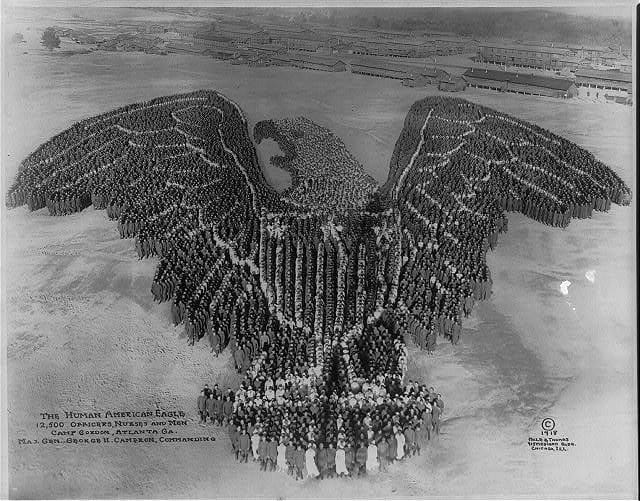
When we look back at our history its easy to look at the accomplishments and milestones - from the Declaration of Independence, to victories in WWI and WWII, the abolition of slavery, the interstate highway system, the trips to the moon, and so much more - but forget the blood, sweat and tears that went into each of them.
And there has always been a lot of work to be done. There may not have always been enough jobs. But there has always been a lot of work required - even just to be a citizen. The work to understand the great challenges of our day. The work to overcome our great errors, and make things better for everyone.
And perhaps the hardest work of all: the work it takes to understand and connect with each other so we can live peaceably together.
Americans in general seem to have lost perspective on what is expected of them as American citizens.
What is the role of citizen and what are the responsibilities required? We seem to confuse being a citizen with being a sports fan. We show up for the big fight every 4 years, root for our team and maybe get a little crazy. After that we're free of all responsibility? Really? Slap on a bumper sticker, buy a hat, be sure to insult the other team anytime we can, that's it? Most of us do not engage in the full work of being an American citizen.
When you vote, you're starting a conversation with whoever gets elected - A conversation that should be carried on fearlessly at least monthly if not weekly with your elected representatives.
A conversation that needs to be informed by your thoughtful reflection and research. Taking the time to read and study, and develop your own independent perspective, rather than repeating memes from YouTubers and cable news shows.
Why? Because in a free democracy, power is invested in you. You are kind of like ...the owner or the boss. You have a leadership role to play. And like any leader you need to communicate frequently with your team. If you don't, who knows what they will do?
When you hear someone complaining about the state of the country, ask them: When was the last time you called or emailed your representative?
Perhaps the hardest work: the work to understand each other and live peaceably.
This is what will break the cycle of people falling prey to promises of certainty from authoritarian figures. This will also allow us to work together in a unified coherent and effective way to address the errors that put our nation at risk. Let's zoom in on this.
First, the very nature of our democratic experiment requires that we put extra effort into getting along. Understanding each other, sharing our experiences, what makes us different, and adapting and adjusting to each other.
It's a uniquely challenging thing to be a melting pot of free people who live peaceably together. Most nations of history were either large groups of a single nationality or ancestry. Where there were mixes of different groups, they were usually kept in forced conformity under the authoritarian fist of a monarch or emperor.
The ideas of freedom to pursue life liberty and happiness, and freedom of speech, freedom of religion are very challenging to implement and sustain when its a broad diverse group.
It takes work - more than we might expect - but when we are willing to invest in this, you get a level of strength, peace and security that surpasses any other arrangements in the world. You also get a level of resilience and creativity that rises above any challenge. That's what we're going for, and that's what makes it worthwhile. If you think about it, you've gotten glimpses of this in your experience so far. There's more to come. It just takes work. And bravery. And a willingness to endure uncertainty rather than believe politicians who promise to save us from it all.
Fortitude
I think if we could go back and talk to our ancestors, and tell them what we are going through, they would empathize. But they might also tell us what they went through - and when we hear it, we might agree their experience was tough too...and maybe worse.
And therein lies the hope. The courage and resilience that got them through can get us through too. It lives on in you and me.
Being a citizen in a free democracy sounds dreamy. Sounds wonderful. The reality is, it is a lot of uncertainty, and a lot of hard work to overcome dangerous risks and errors. Slow progress on great flaws that comes only through exhausting diligence. Taking risks, caring and showing up. This is not for the faint of heart.
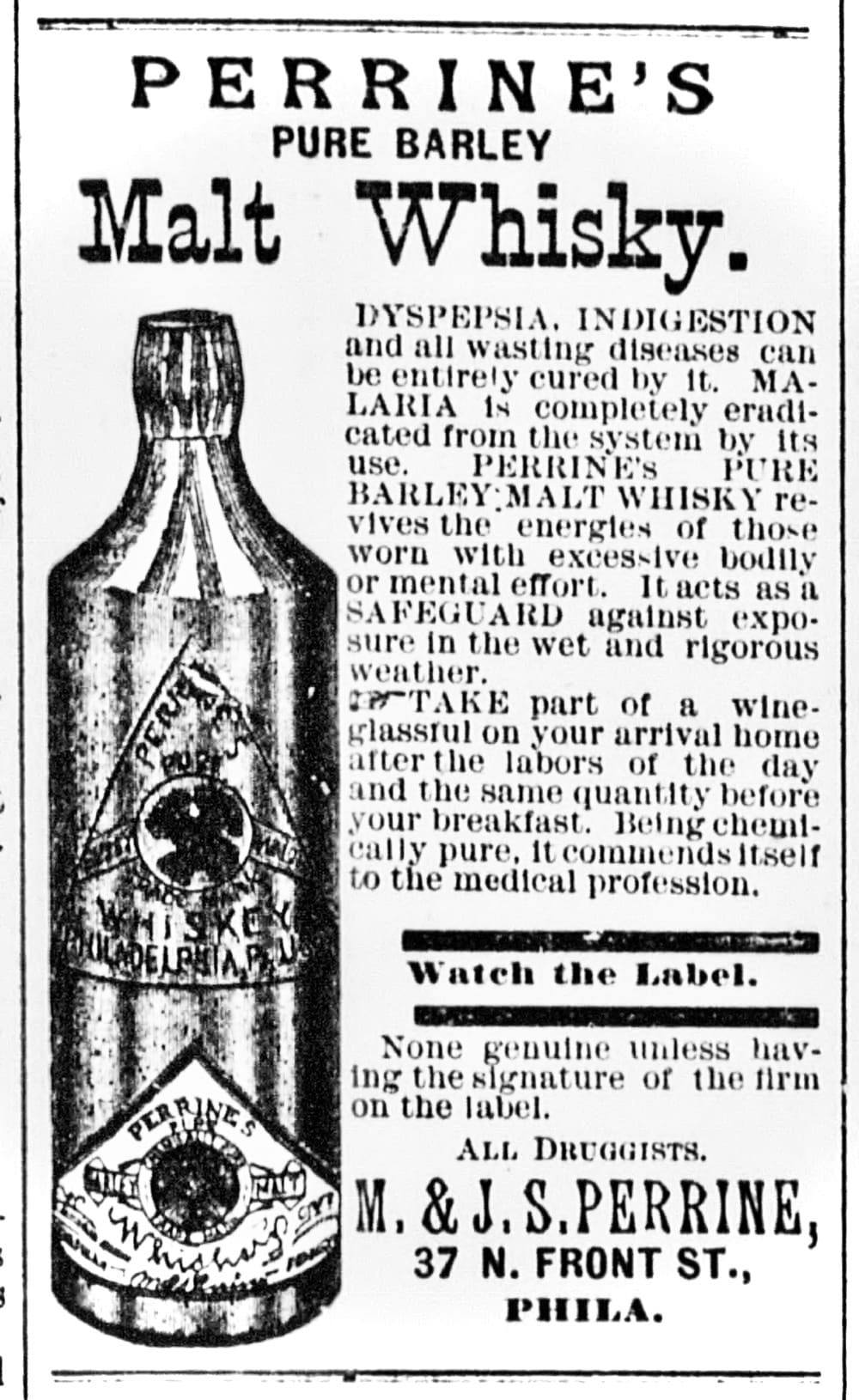
On this July 4th, if you reach for a little whiskey, I won't blame you. As an American citizen you literally have one of the toughest jobs in the world. Maybe no one told you.
Now you know. Happy 250.
Ralph

Member discussion